Best Day Trips from Summit County
Why Frisco is Your Perfect Basecamp
Mapping out a rocky mountain itinerary often requires choosing between extreme isolation and massive resort crowds. Frisco eliminates that compromise. Anchored right on the shores of the Dillon Reservoir and sitting at the geographic center of Summit County, this town operates as the definitive launchpad for high-altitude exploration. You can wake up, grab a coffee on Main Street, and reach half a dozen world-class trailheads before the morning frost burns off the pines.
Establishing your headquarters here—perhaps by securing a central spot through our Places to Stay & Lodging guide—means spending less time staring at taillights on Interstate 70 and more time actually engaging with the terrain. Frisco connects the dots between mining history, geological oddities, and legendary alpine peaks. You get the robust infrastructure of a modern mountain town without losing immediate access to the rugged, unfiltered wild. It is the logical nucleus for anyone aiming to conquer the surrounding topography.

Top Nearby Spots Comparison
| Attraction | General Drive Time from Frisco | Primary Vibe |
|---|---|---|
| Copper Mountain | 10 Minutes | High-Energy Alpine Sports |
| Breckenridge | 20 Minutes | Gold Rush History & Retail |
| Rifle Falls State Park | 2 Hours | Lush Microclimates & Caves |
| Crystal Mill | 2.5 Hours | Rugged 4×4 Wilderness |
| Sasquatch Outpost | 1.5 Hours | Quirky Cryptozoology |
Highlights Around the Region
Summit County and its neighboring mountain corridors hold a massive concentration of distinct environments. We break these down into the immediate local loops and the longer, more demanding overland excursions.
The Local Loop: Summit County Essentials
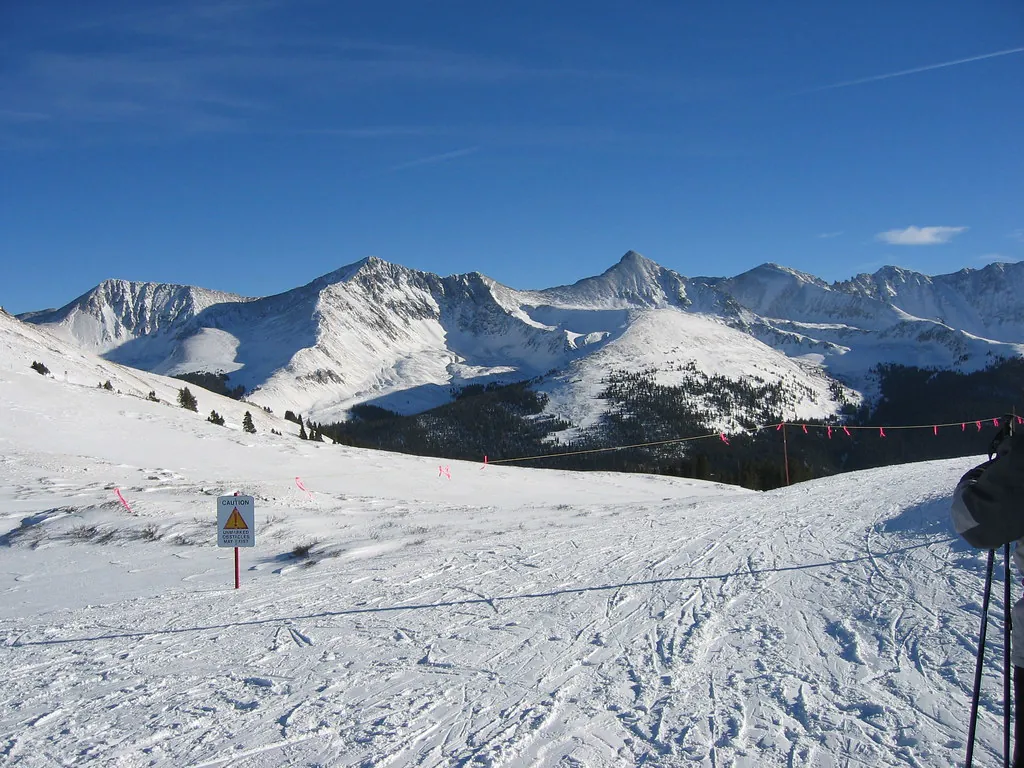
Copper Mountain
Just ten minutes west of Frisco, Copper Mountain stands out for its naturally segregated terrain. The mountain’s geological layout inherently separates beginner slopes on the west from the aggressive, steep runs on the east. This natural division creates a highly efficient flow for skiers and snowboarders, drastically reducing bottlenecking at the lifts. It bypasses much of the artificial village atmosphere found elsewhere, focusing intensely on the actual mechanics of winter sports.
When the snow melts, the resort pivots hard into gravity-fueled summer operations. The downhill mountain biking network here connects directly to the broader Vail Pass path system. If you want to push your limits, booking a guided downhill mountain biking excursion through the neighboring Vail and Copper corridors offers an immense adrenaline spike. Alternatively, Woodward Copper provides year-round indoor training facilities for action sports athletes looking to dial in their aerial awareness.
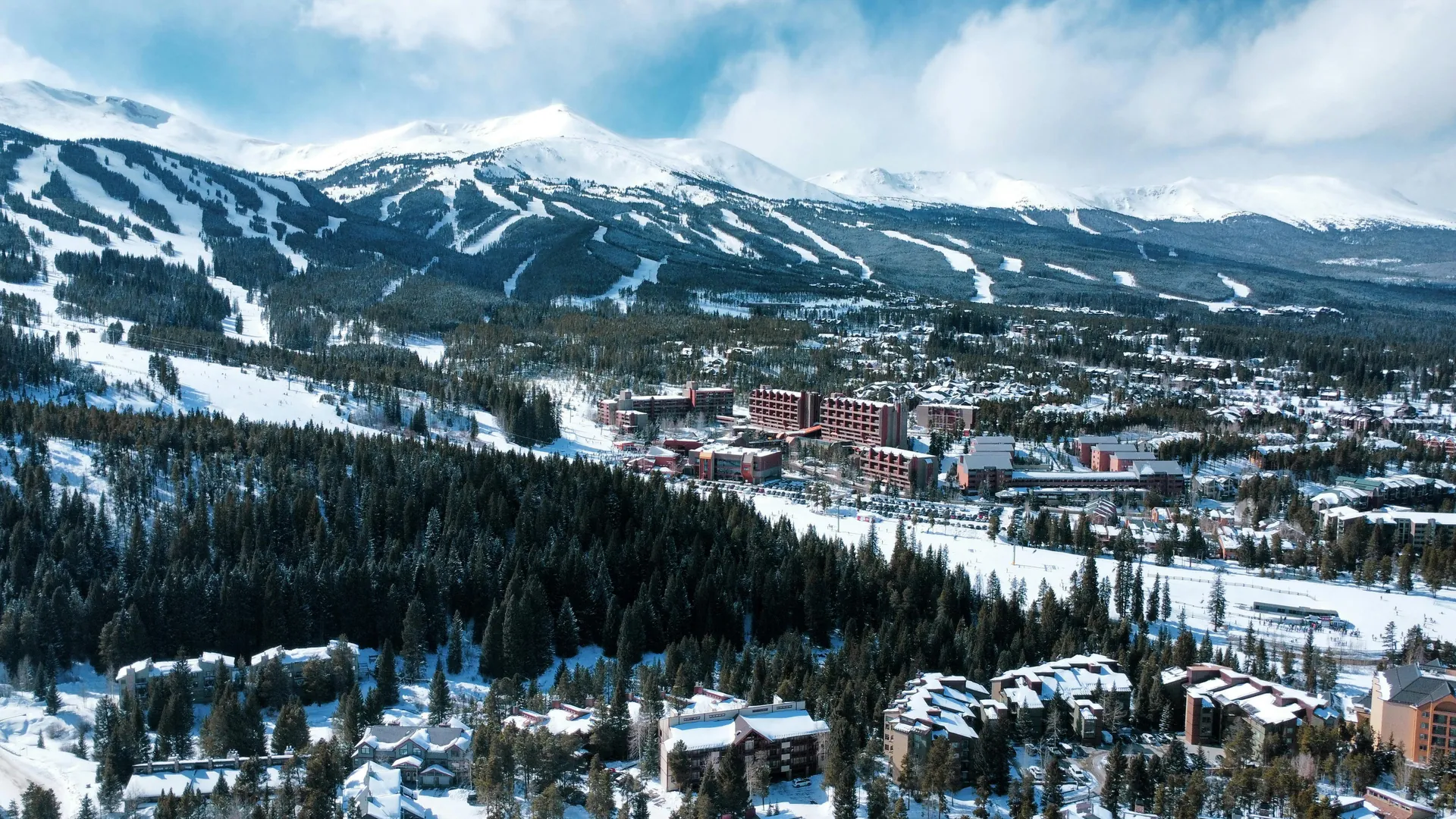
Breckenridge
Breckenridge pairs intense gold rush history with a massive, sprawling ski resort infrastructure. The historic Main Street retains its 19th-century architectural lines, housing independent gear shops, craft distillers, and art galleries. You can spend an entire afternoon just studying the preserved facades and reading the plaques detailing the harsh realities of the early mining camps. The sheer volume of pedestrian traffic here gives the town a completely different kinetic energy compared to Frisco’s laid-back shorefront.
Because parking in the core district is notoriously challenging, smart travelers leave their cars at the satellite lots or utilize regional transit. If you are driving up from the Front Range, plugging into a smartphone driving tour provides excellent historical context before you even hit town limits. Once you arrive, securing a fat tire e-bike rental is the absolute best way to bypass traffic and explore the intricate paved paths stretching around the Blue River.
Silverthorne
Silverthorne acts as the northern gateway to Summit County, sliced straight down the middle by the Blue River. This town has evolved far beyond its origins as a mere highway stopover. The river itself is a gold medal fishing water, heavily populated with massive trout that feed right beneath the town’s bridges. Anglers stand waist-deep in the freezing currents, executing precise roll casts just yards away from major retail centers.
Beyond the river banks, Silverthorne serves as the logistical hub for outfitting your deep-country excursions. The extensive outlet malls and specialized gear shops make it the perfect place to replace a broken binding or grab an extra thermal layer before heading deeper into the Gore Range. It is a strategic resupply point that happens to sit in a staggeringly beautiful valley.
For the History Buffs: Mining Ruins and Ghost Towns
Vindicator Valley Trail
Driving south toward the historic town of Victor brings you to the Vindicator Valley Trail. This two-mile dirt and gravel path carves through the shattered remains of the 1890s Cripple Creek gold rush. Massive wooden headframes, collapsed ore sorting houses, and rusted machinery litter the hillside. Walking this loop feels like stepping into a post-industrial graveyard. The sheer scale of the abandoned infrastructure emphasizes just how much capital and human labor was poured into these hills.
The trail sits entirely above 10,000 feet, exposing hikers to intense solar radiation and unpredictable wind shears. There is zero tree cover. You are walking across a scarred, treeless landscape dominated by tailings piles and open sky. You need to carry plenty of water and wear serious sun protection, as the arid atmosphere will strip your hydration faster than you realize.
Crystal Mill
Located outside the tiny enclave of Marble, the Crystal Mill is arguably the most photographed historic site in Colorado. Built in 1892, this wooden powerhouse clings precariously to a rock outcrop directly above the violent rapids of the Crystal River. It originally utilized a horizontal waterwheel to generate compressed air for the nearby silver mines. Today, the weathered wood and dramatic river plunge create an arresting visual contrast against the dense pine forests.
Reaching the mill is a punishing endeavor. The nine-mile route from Marble requires a high-clearance 4×4 vehicle, an ATV, or a grueling hike. The road is composed of jagged, suspension-breaking rocks and narrow cliffside drop-offs. Standard passenger cars will be destroyed if they attempt this route. If you lack the proper vehicle, local outfitters in Marble run dedicated jeep tours to transport photographers and historians up the canyon safely.
Do not attempt the Crystal Mill road in a rental sedan. You will lose your oil pan within the first mile.
Whimsical Wonders: Unique Colorado Culture
Carousel of Happiness
Up in the high-altitude town of Nederland sits a restored 1910 Looff carousel mechanism spinning a menagerie of hand-carved wooden animals. The creator, Scott Harrison, spent nearly three decades carving these figures as a therapeutic response to his combat experiences in the Vietnam War. The resulting collection includes everything from traditional horses to a massive gorilla, a grinning frog, and an intricately detailed alpaca.
Stepping inside the carousel building hits you with a massive wall of sound from the restored 1913 Wurlitzer band organ. The sheer mechanical force of the organ, combined with the spinning artwork, creates a deeply disorienting but joyful sensory overload. It costs just a few dollars to ride, making it a compelling, emotionally resonant detour on your mountain drive.
Michael Garman’s Magic Town
Down in Colorado Springs, sculptor Michael Garman built a 3,000-square-foot, 1/6th-scale miniature city. Magic Town does not depict a sanitized fairy tale. Instead, it meticulously recreates gritty, mid-century American urban life. The dioramas feature cramped tenement apartments, neon-lit dive bars, and rain-slicked alleyways. The level of detail is staggering, right down to the tiny, discarded newspapers and peeling paint on the fire escapes.
The installation utilizes complex two-way mirrors and holographic technology. As you walk down the miniature streets, the scenes actually shift. An empty alley suddenly reveals a figure pacing in the shadows, or an apartment window changes entirely when you shift your viewing angle. It demands slow, methodical observation to catch the hundreds of micro-narratives playing out behind the glass.
Geology & Nature: State Parks and Earth Science
Rifle Falls State Park
Far out on the western slope, Rifle Falls State Park offers an environment that feels entirely disconnected from the typical Colorado alpine zone. Three distinct 70-foot waterfalls plunge over a massive limestone cliff face, generating a constant mist. This perpetual moisture creates a bizarre, tropical-feeling microclimate characterized by dense, violently green vegetation and thick moss completely covering the rock walls.
Behind the cascading water, a series of dark limestone caves wait to be explored. You need a reliable headlamp to navigate the slippery, uneven floors of these caverns. The sharp contrast between the arid high desert driving route and this localized jungle oasis is jarring. Review the current park capacity and trail conditions via the official Colorado Parks and Wildlife portal before making the long drive west.
Castlewood Canyon State Park
Southeast of Denver, Castlewood Canyon slices through the high plains. The defining feature of this park is the catastrophic history embedded in its geography. In 1933, the Castlewood Dam suffered a massive structural failure, sending a 15-foot wall of water tearing down Cherry Creek all the way into downtown Denver. Today, the massive, shattered concrete blocks of the ruined dam remain scattered across the creek bed.
The hiking trails here trace the rocky rim of the canyon before dropping sharply down to the water level. The ecosystem is a harsh mix of scrub oak, prickly pear cactus, and ponderosa pine. It is an exceptional location for bird watching, particularly for spotting turkey vultures riding the thermal updrafts rising from the canyon floor. The terrain is rugged, heavily exposed to the sun, and requires sturdy footwear.
Colorado School of Mines Geology Museum
Located on the university campus in Golden, this museum holds one of the most comprehensive earth science collections in North America. The facility displays thousands of specimens, including massive unrefined gold nuggets pulled from local Colorado strikes, rare crystallized minerals, and a substantial collection of meteorites. It strips away the folklore of the mining era and focuses purely on the hard science of extraction and geology.
The basement houses a specialized radioactive and fluorescent mineral exhibit. Under ultraviolet light, otherwise unremarkable grey rocks explode into vivid, glowing neon colors. The museum also displays one of the Apollo 17 moon rocks, designated the “Goodwill” moon rock. For anyone interested in the physical forces that shaped the Rocky Mountains, the Colorado School of Mines Geology Museum is mandatory viewing.
Off-the-Beaten-Path: Cryptozoology and Ancient History
Sasquatch Outpost
Operating out of the small mountain town of Bailey, the Sasquatch Outpost merges a standard roadside general store with an intense, dead-serious cryptozoology museum. The back rooms are dedicated entirely to chronicling Bigfoot sightings across the Rocky Mountain region. The walls are covered in plaster foot casts, detailed encounter maps, and endless audio recordings of unexplained vocalizations captured deep in the national forests.
The operators treat the subject matter with genuine academic curiosity rather than campy irony. They log recent reports from hunters and hikers, serving as an unofficial clearinghouse for regional anomalies. Taking an hour to walk through their evidence room offers a fascinating look at the fringe culture that thrives in the remote pockets of the state.
Hovenweep National Monument
Pushing far southwest to the Utah border brings you to Hovenweep. This remote site protects six clusters of Ancestral Puebloan ruins dating back to the 13th century. The stone towers are masterfully engineered, built directly onto the precarious edges of shallow desert canyons. Unlike the massive cliff dwellings at Mesa Verde, Hovenweep feels incredibly isolated. You will likely have the entire canyon rim to yourself.
The masonry features distinct solstice alignments, proving these structures served complex astronomical purposes alongside basic defense. The silence out here is heavy and absolute. Because of the sheer distance from major highways, it demands a committed drive. Check with the National Park Service for current road conditions, as the final approach utilizes rough dirt grades.
Spiritual & Artistic Journeys
Shrine of the Stations of the Cross
San Luis, the oldest continuously occupied town in Colorado, hosts an extraordinary installation of religious art. A steep dirt trail winds up a prominent mesa overlooking the town. Along this path, sculptor Huberto Maestas installed a series of life-size bronze figures depicting the final hours of Jesus Christ. The artistic execution is incredibly visceral, capturing the agony and physical weight of the narrative in raw metal.
The climb itself demands physical exertion. You pull yourself up the dusty switchbacks until you reach the small adobe chapel sitting at the summit. From the top, you gain sweeping, unobstructed views of the Sangre de Cristo mountain range cutting across the horizon. It is a powerful merger of stark high-desert topography and intense human expression.
Logistics & Safety: Before You Hit the Road
Execution is everything in the mountains. A brilliant itinerary falls apart rapidly if you ignore the physical reality of the environment. Always check teh forecast before departing your Frisco basecamp, because regional weather systems can drastically alter your travel times.
- Altitude Management: Leaving Frisco (9,097 ft) to explore lower elevations provides temporary relief, but returning to sleep at high altitude requires constant hydration. Read our Navigating High Altitude in the Rockies guide to understand the physiological demands.
- Vehicle Preparation: Depending on the season, heavy mountain snowfall is a situation you need to be prepared for. Colorado enforces strict traction laws. Review our Winter Driving in the Colorado Mountains post and check real-time road closures via the Colorado Department of Transportation (CDOT). That steep canyon road is not a route you want to get stuck on.
- Local Regulations: Every jurisdiction handles fire bans and trail access differently. Brush up on our Visitor Rules & Guidelines to ensure you do not inadvertently violate backcountry protocols.
The “Frisco Return”: Evening Dining & Relaxation
After logging hundreds of miles on the highway or burning out your quads on a steep ascent, returning to Frisco feels like dropping anchor in a safe harbor. You dump your gear, take a hot shower, and walk down to Main Street. Whether you want an aggressive calorie reload with a massive burger or a quiet craft cocktail, our Local Dining & Restaurant Guide maps out exactly where to repair the damage from a long day on the road.
Base your trip out of Frisco, respect the logistics, and use this central hub to methodically carve through the best terrain the Rockies have to offer. For detailed instructions on getting your vehicle into town in the first place, consult our How to get to Frisco logistics page.